Several years ago, the Idaho Coalition Against Sexual & Domestic Violence moved into the Linen Building with a vision to transform the commercial steam laundry building with a history of harmful, toxic working conditions for girls and women to a space that stands for what is possible when everyone is valued, safe, and can thrive.
Our vision is to transform the Linen Building into a home for activism and engagement by offering social justice leaders, communities, and organizations the space and support they need to spark social change. It’s an event space – and more. It can spark serendipitous interactions, build relationships, create networks, and grow sustainable solutions by bringing diverse organizations together as they work to build a better world; a world where we choose all of us.
Over the years, social justice leaders from the Women’s March, Standing Rock, and the transgender community, and organizations like the Women’s & Children’s Alliance, ACLU, Planned Parenthood, Idaho Legal Aid, PODER of Idaho, Idaho Peace Coalition, Conservation Voters of Idaho, and Boise Bicycle Project have been able to use the event space at no or reduced cost. The Idaho Coalition also brings the broader community in through performances and art, like the Stories of Transformation or the community conversation on discrimination, hate and violence in our communities – from Boise to Dietrich to Coeur d’Alene.
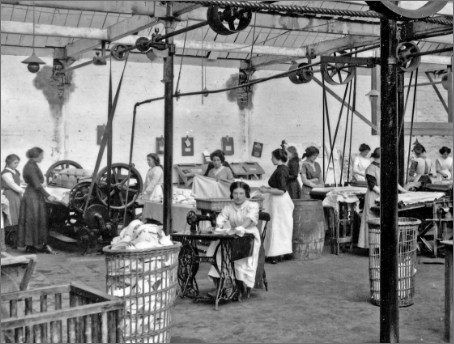
Laundry has a long been gendered – a traditional “female” skill. Laundresses traditionally counted among the most visible of female occupations. Commercial steam laundries both reinforced gender rigid gender roles and the transformation of women’s work both in and outside the home. Not surprisingly, the steam laundry business was predominately owned by men and employed large numbers of girls and women. Working conditions for women and women of color in the steam laundry business were harsh – toxic chemicals, long hours, and more. Gendered relationships crossed all aspects of the laundry industry. Rigid gender roles played a significant part in the relationships of managers to workers, of workers to union leaders, and in the marketing of laundry technology to consumers.
In the early 1900’s, steam laundry workers were a catalyst for change. They became the early suffragettes. Margaret Hinchey, a laundry worker turned labor activist, told why she became a suffragist who now works as an organizer for the Woman Suffrage Party:
“People have often told me that the home is the place for women. But when that home is standing for 18 hours a day over a steam machine in a laundry, working one’s very soul out, and going home so tired that sleep was almost impossible, and getting $3 a week. It was then that I started to work for woman suffrage, and I shall never stop until I die.“
And it was the laundry industry that led women to look to action to improve the dismal conditions of work. In 1938, Ruth Green, a steam laundry worker testified to Congress which resulted in passage of the Fair Labors Standard Act:
“Laundry work is hard work; it is unhealthy work. We work in heat and steam. Often, in bitter cold weather, the piece workers have to keep their windows open because of the steam and hot air from the pressing machines. This causes all of us to be in the draft.“
Together, we are re-imagining the very space that once oppressed women. We are working to unlock the full potential of ourselves and each other to transform the building into home for activism and an engagement — a community space!
Each time you rent the Linen Building, you are joining and supporting a community working towards a world rooted in love, equity, connection, resilience, and joy.